
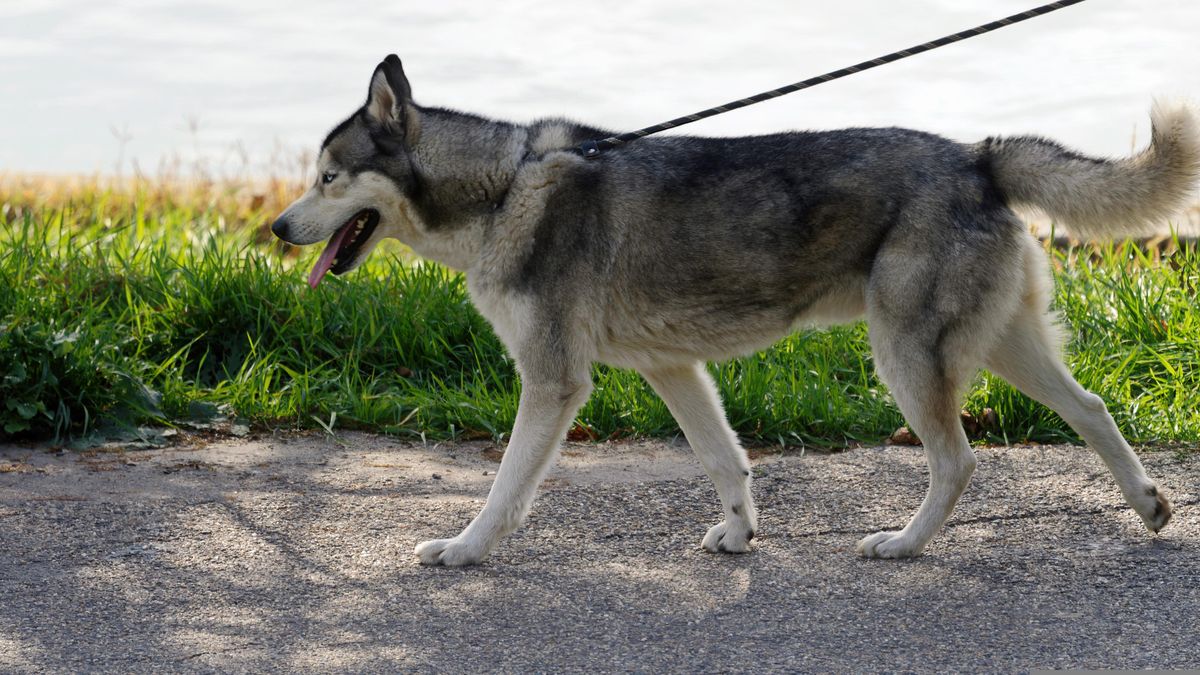
Why is your dog pulling?
Before correcting, we must understand. A dog generally pulls for three reasons: their natural walking pace is faster than ours, they want to reach for a scent (excitement), or they are stressed by the environment.
Our 5 professional tips:
1. Change hardware
Ban choke collars that create pain. Opt for oneY harness (anti-pull)with attachment on the chest. This preserves his neck. At least for the first time before moving on to the collar.
2. The tree technique
As soon as the leash becomes taut, stop suddenly.
Become still.
Do not pull back, this will promote the traction effect.
Wait for your dog to return his attention to you and relax the leash before leaving.
He will quickly understand thatvoltage = stopAndloose leash = walk.
As you will be in a trial/error process which is the most beneficial for positive reinforcement.
3. Reward the right position
As soon as the dog is at your height without pulling, congratulate him warmly (treat, happy voice). Walking near you must become ultra-profitable.
4. Use a lanyard
Sometimes the dog pulls just because he lacks freedom. A 3 to 5 meter lanyard in a secure environment reduces frustration during the education phase.
5. Spend it BEFORE the leash walk
Too much energy prevents listening. Do some scent exercises at home before you leave.
As with all exercises, we recommend carrying out a physical expenditure before being able to work on the mental expenditure and promote learning.
Some additional tips for your pet's balance
Managing daily behavior requires attentive and adapted presence. Don’t hesitate to set up regular cognitive enrichment sessions at home. For example, hiding treats or offering mental occupation toys tires out a dog or cat much more effectively than simple physical outings.
Our services are also there to support you in setting up the routine in the long term and not just to correct a problem in the moment.
The importance of respecting sleep phases
An animal that lacks sleep (especially puppies or kittens) can quickly become irritable, destructive or aggressive. Be sure to provide him with absolutely calm rest areas.
Heavy biting, destruction of furniture and disobedience can come from this bias.
Why be accompanied by a professional?
Each animal is unique and has its own passive. If you notice persistent blockages in your learning, calling on the expertise of a Cani'Oc educator or behaviorist helps resolve mutual misunderstandings, regardless of the age of your animal.
Fundamental ethological needs that should never be ignored
Beyond the obvious physical specificities specific to each breed, strict compliance with the overall ethological model of canines or felids remains the absolute keystone of a trouble-free life. Too often, owners confuse human affection with a coherent response to the animal's natural impulses. It is vital to understand that your companion's reptilian brain dictates motor behaviors that deprivation or boredom invariably end up corrupting in the form of serious behavioral pathologies.
The importance of a complete expenditure: Physical, cognitive and olfactory
The classic ten-minute "sanitary" walk to the bottom of the building is an aberration for 90% of pets. The nervous system needs healthy fatigue. Olfactory expenditure (tracking, mantrailing, or simple games of looking for kibble in the garden) uses energy-intensive areas of the brain. Fifteen minutes of flair is well worth an hour of frantic chasing after a ball. The latter, moreover, causes cortisol levels (the stress hormone) to explode and generates chronic overexcitement in dogs.
Prevention rather than cure: The central role of the canine and feline trainer
Waiting until the bite occurs, until the wallpaper is torn away or until cohabitation becomes unbearable to consult a professional is an ethical and financial miscalculation. A preventive behavioral assessment, carried out upon acquisition of the puppy or kitten, lays the healthy foundations for fluid and respectful communication.
Why the positive and caring approach is the only valid option
Old theories of dominance or "pack" involving physical force, the use of electric, choke or coercive collars are today scientifically refuted by the latest advances in animal cognitive neuroscience. Fear teaches nothing lasting. It temporarily inhibits annoying behavior but crystallizes acquired distress which will emerge tenfold at the slightest spark.
Conclusion and call to action for your companion
By applying these gentle, clear and repetitive methodologies, any individual can progress towards serenity. Cani'Oc Connexion offers you personalized support to guide you step by step in the development and safe care of your little ones.


Commentaires (0)
Laisser un avisSoyez le premier à laisser un commentaire !
Partagez votre avis
Votre adresse email ne sera pas publiée.